
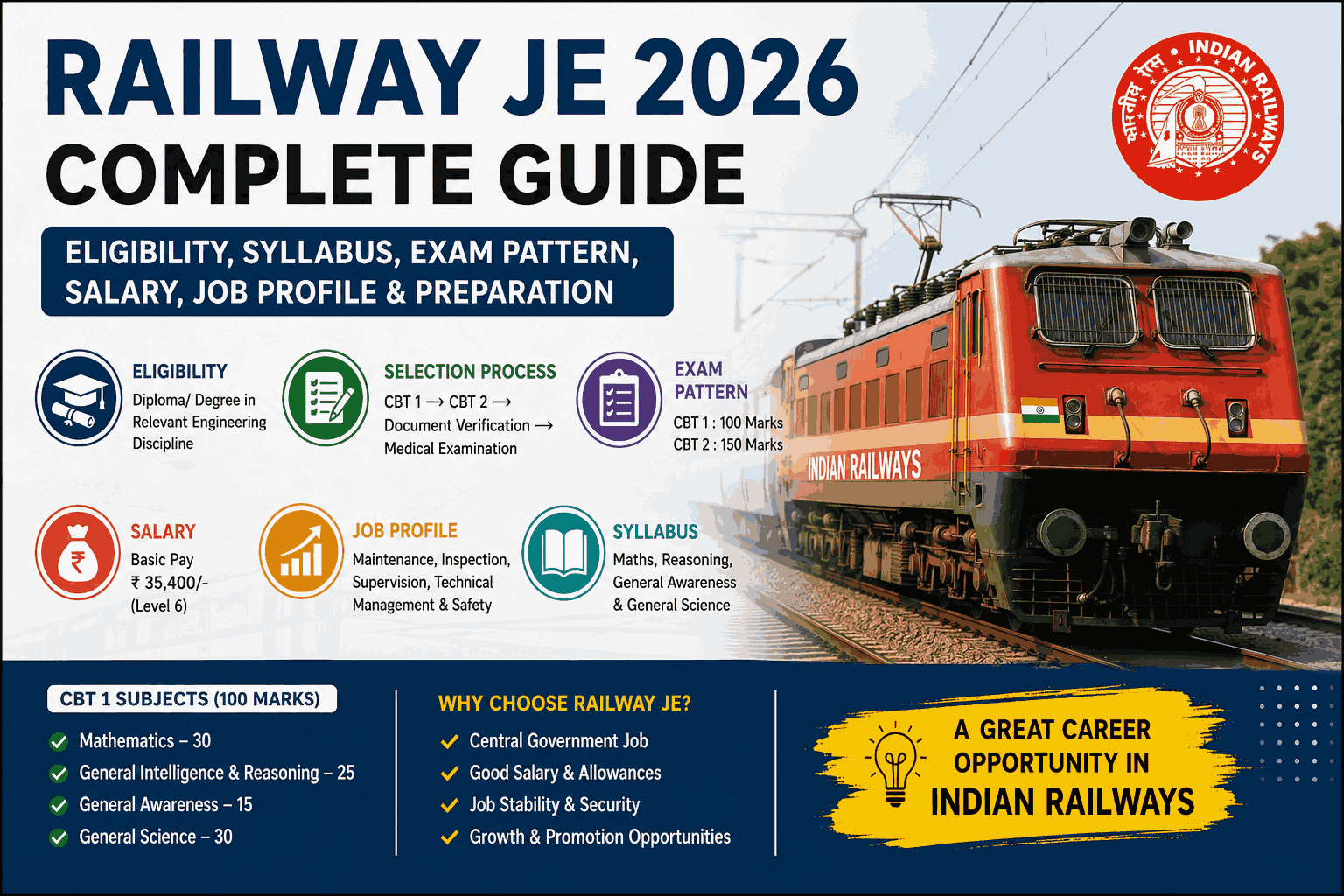
1. CBT-1 Exam Pattern
| Subject | Questions | Marks |
|---|---|---|
| Mathematics | 30 | 30 |
| General Intelligence & Reasoning | 25 | 25 |
| General Awareness | 15 | 15 |
| General Science | 30 | 30 |
| Total | 100 | 100 |
- Total Questions: 100
- Total Marks: 100
- Duration: 90 minutes
- Negative Marking: 1/3 mark for every incorrect answer
- Mode: Computer Based Test
- Question Type: Objective/Multiple Choice
2. Mathematics – Complete Syllabus
30 Questions | 30 Marks
A. Number System
- Natural Numbers
- Whole Numbers
- Integers
- Rational Numbers
- Irrational Numbers
- Real Numbers
- Prime Numbers
- Composite Numbers
- Divisibility Rules
- Factors and Multiples
- LCM
- HCF
- Remainder
- Unit Digit
- Simplification
B. BODMAS
- Brackets
- Orders
- Division
- Multiplication
- Addition
- Subtraction
- Fractions
- Decimal calculations
C. Fractions and Decimals
- Proper fractions
- Improper fractions
- Mixed fractions
- Decimal conversion
- Fraction-to-decimal conversion
- Decimal-to-fraction conversion
- Comparison of fractions
D. Ratio and Proportion
- Basic ratio
- Equivalent ratio
- Proportion
- Direct proportion
- Inverse proportion
- Continued proportion
- Partnership
E. Percentage
- Basic percentage
- Percentage increase
- Percentage decrease
- Successive percentage
- Population problems
- Marks-based problems
- Price-related problems
F. Profit and Loss
- Cost Price
- Selling Price
- Marked Price
- Profit
- Loss
- Profit percentage
- Loss percentage
- Discount
- Successive discounts
G. Simple Interest
- Principal
- Rate
- Time
- Simple Interest
- Amount
H. Compound Interest
- Compound Interest
- Annual compounding
- Half-yearly compounding
- Difference between SI and CI
I. Time and Work
- Work efficiency
- Individual work
- Combined work
- Work and wages
- Pipes and cisterns
- Alternate work
J. Time, Speed and Distance
- Speed
- Distance
- Time
- Average speed
- Relative speed
- Trains
- Boats and streams
K. Algebra
- Basic algebra
- Algebraic identities
- Linear equations
- Quadratic equations
- Simplification
- Polynomials
- Surds and indices
L. Geometry
- Lines
- Angles
- Triangles
- Quadrilaterals
- Polygons
- Circles
- Congruence
- Similarity
- Theorems
M. Mensuration
- Square
- Rectangle
- Triangle
- Circle
- Cuboid
- Cube
- Cylinder
- Cone
- Sphere
- Surface area
- Volume
- Perimeter
N. Trigonometry
- Basic trigonometric ratios
- sin
- cos
- tan
- cot
- sec
- cosec
- Trigonometric identities
- Heights and distances
- Basic trigonometric values
O. Elementary Statistics
- Mean
- Median
- Mode
- Data interpretation
- Tables
- Graphs
- Basic statistical calculations
P. Age Problems
- Present age
- Past age
- Future age
- Ratio of ages
- Average age
Q. Calendar and Clock
- Calendar
- Odd days
- Day/date problems
- Clock angles
- Time-related problems
3. General Intelligence & Reasoning
25 Questions | 25 Marks
This section tests your logical and analytical ability.
A. Analogy
- Number analogy
- Alphabet analogy
- Word analogy
- Figure analogy
B. Classification
- Number classification
- Alphabet classification
- Word classification
- Figure classification
C. Series
- Number series
- Alphabet series
- Alphanumeric series
- Missing number
- Missing alphabet
- Mixed series
D. Coding-Decoding
- Letter coding
- Number coding
- Alphabet coding
- Symbol coding
- Substitution coding
- Pattern-based coding
E. Mathematical Operations
Questions involving symbols and replacement of mathematical operations.
F. Blood Relations
- Family relationships
- Generation
- Coded blood relations
- Family tree
G. Direction Sense
- North/South/East/West
- Left/right turns
- Distance
- Shortest distance
- Direction-based puzzles
H. Venn Diagrams
- Classification
- Group relationships
- Logical relationships
I. Syllogism
- Statements
- Conclusions
- All/Some/No
- Possibility cases
- Venn-based syllogism
J. Statement and Conclusion
- Statement
- Conclusion
- Logical inference
K. Statement and Assumption
- Identifying assumptions
- Logical interpretation
L. Decision Making
- Situation-based questions
- Logical decisions
- Best possible option
M. Data Sufficiency
- Statement-based data
- Mathematical data
- Logical data
N. Puzzle
- Seating arrangement
- Order/ranking
- Distribution
- Scheduling
- Grouping
O. Analytical Reasoning
- Logical sequence
- Arrangement
- Conditions
- Relationship-based reasoning
P. Non-Verbal Reasoning
- Mirror image
- Water image
- Figure completion
- Paper folding
- Paper cutting
- Embedded figures
- Figure counting
- Pattern recognition
Q. Similarities and Differences
- Objects
- Numbers
- Words
- Figures
4. General Awareness
15 Questions | 15 Marks
This section can be unpredictable, so prepare both static GK + current affairs.
A. Current Affairs
Focus particularly on the previous 6–12 months before the examination.
Important areas:
- National news
- International news
- Government schemes
- Important appointments
- Awards
- Sports
- Science & technology
- Defence
- Space missions
- Important days
- Books and authors
- Summits
- International organizations
- Economic developments
- Railway-related news
B. Indian History
Ancient India
- Indus Valley Civilization
- Vedic Period
- Buddhism
- Jainism
- Mauryan Empire
- Gupta Empire
Medieval India
- Delhi Sultanate
- Mughal Empire
- Bhakti Movement
- Sufi Movement
- Important rulers and battles
Modern India
- British rule
- Revolt of 1857
- Indian National Congress
- Social reform movements
- Swadeshi Movement
- Non-Cooperation Movement
- Civil Disobedience Movement
- Quit India Movement
- Indian Independence
C. Indian Geography
- Physical geography
- Rivers
- Mountains
- Plateaus
- Plains
- Climate
- Soil
- Agriculture
- Minerals
- Industries
- States and capitals
- Important geographical locations
D. Indian Polity
- Constitution of India
- Fundamental Rights
- Fundamental Duties
- Directive Principles
- President
- Vice-President
- Prime Minister
- Parliament
- Supreme Court
- High Courts
- Election Commission
- CAG
- Constitutional bodies
- Panchayati Raj
- Local government
E. Indian Economy
- Basic economic concepts
- GDP
- Inflation
- Banking
- RBI
- Budget
- Taxation
- Fiscal policy
- Monetary policy
- Government schemes
- Financial institutions
F. Art and Culture
- Indian dances
- Music
- Festivals
- Literature
- Paintings
- Architecture
- UNESCO heritage sites
- Important cultural personalities
G. Sports
- Major tournaments
- Cups and trophies
- Sports personalities
- Olympic Games
- Asian Games
- Commonwealth Games
- World Championships
- Important records
H. General Static GK
- Countries and capitals
- Currencies
- Important organizations
- Headquarters
- National parks
- Wildlife sanctuaries
- Important monuments
- Important personalities
- First in India
- First in the world
- Important inventions
5. General Science
30 Questions | 30 Marks
This is one of the highest-weightage sections in CBT-1.
The syllabus is broadly based on Physics, Chemistry and Biology at approximately 10th-standard level.
A. Physics
Units and Measurements
- SI units
- Physical quantities
- Measurement
- Basic instruments
Motion
- Distance
- Displacement
- Speed
- Velocity
- Acceleration
- Graphs
- Equations of motion
Force
- Force
- Newton’s laws
- Momentum
- Inertia
- Friction
Work, Energy and Power
- Work
- Energy
- Kinetic energy
- Potential energy
- Power
- Conservation of energy
Gravitation
- Gravity
- Acceleration due to gravity
- Mass and weight
- Free fall
- Escape velocity
- Pressure
Heat
- Temperature
- Heat
- Thermal expansion
- Specific heat
- Heat transfer
- Conduction
- Convection
- Radiation
Sound
- Sound waves
- Frequency
- Wavelength
- Amplitude
- Speed of sound
- Echo
- Ultrasound
Light
- Reflection
- Refraction
- Mirrors
- Lenses
- Human eye
- Optical instruments
- Dispersion
Electricity
- Electric current
- Voltage
- Resistance
- Ohm’s law
- Electric power
- Electric energy
- Series/parallel circuits
- Heating effect
Magnetism
- Magnets
- Magnetic field
- Electromagnetism
- Electromagnetic induction
- Electric motor
- Generator
Modern Physics
- Atom
- Nucleus
- Radioactivity
- Nuclear energy
- X-rays
- Basic semiconductor concepts
6. Chemistry
Basic Chemistry
- Matter
- States of matter
- Physical and chemical changes
- Elements
- Compounds
- Mixtures
Atomic Structure
- Atom
- Proton
- Neutron
- Electron
- Atomic number
- Mass number
- Isotopes
Periodic Table
- Periodic classification
- Groups
- Periods
- Metals
- Non-metals
- Metalloids
Chemical Reactions
- Combination
- Decomposition
- Displacement
- Double displacement
- Oxidation
- Reduction
- Redox reactions
Acids, Bases and Salts
- Acids
- Bases
- Indicators
- pH
- Neutralization
- Common salts
Metals and Non-Metals
- Properties
- Reactivity
- Alloys
- Corrosion
- Extraction basics
Carbon Compounds
- Carbon
- Hydrocarbons
- Alcohols
- Acids
- Soaps
- Detergents
- Polymers
Everyday Chemistry
- Fertilizers
- Cement
- Glass
- Ceramics
- Fuels
- Medicines
- Food preservatives
7. Biology
Cell Biology
- Cell structure
- Cell organelles
- Plant cell
- Animal cell
- Cell division
Human Body
- Digestive system
- Respiratory system
- Circulatory system
- Excretory system
- Nervous system
- Endocrine system
- Reproductive system
- Skeletal system
- Muscular system
Nutrition
- Carbohydrates
- Proteins
- Fats
- Vitamins
- Minerals
- Balanced diet
- Deficiency diseases
Diseases
- Communicable diseases
- Non-communicable diseases
- Bacterial diseases
- Viral diseases
- Deficiency diseases
- Prevention and vaccination
Plant Biology
- Photosynthesis
- Respiration
- Transportation
- Plant tissues
- Reproduction
- Plant hormones
Genetics
- Heredity
- Genes
- Chromosomes
- DNA
- Basic Mendelian genetics
Ecology
- Ecosystem
- Food chain
- Food web
- Biodiversity
- Pollution
- Environmental conservation
Evolution
- Adaptation
- Natural selection
- Basic evolutionary concepts
8. Most Important Topics for CBT-1
If your preparation time is limited, prioritize these:
Mathematics
- Percentage
- Ratio & Proportion
- Profit & Loss
- Time & Work
- Time, Speed & Distance
- SI & CI
- Number System
- LCM/HCF
- Algebra
- Geometry
- Mensuration
- Trigonometry
- Statistics
Reasoning
- Series
- Coding-Decoding
- Analogy
- Classification
- Syllogism
- Venn Diagram
- Blood Relation
- Direction
- Mathematical Operations
- Puzzle
- Statement & Conclusion
- Data Sufficiency
General Science
Physics
- Electricity
- Motion
- Force
- Work & Energy
- Heat
- Light
- Sound
Chemistry
- Chemical reactions
- Acids, bases & salts
- Periodic table
- Metals & non-metals
- Carbon compounds
Biology
- Human body
- Diseases
- Vitamins
- Cell
- Nutrition
- Plant biology
- Genetics
- Ecology
General Awareness
Focus on:
- Current Affairs
- Indian Polity
- History
- Geography
- Economy
- Sports
- Awards
- Government schemes
- Science & technology
- Railways-related current affairs
CBT-1 Preparation Priority
A good preparation ratio would be:
General Science → Mathematics → Reasoning → General Awareness
Why?
Because Science + Mathematics + Reasoning = 85/100 questions in the CBT-1 pattern.
So don’t spend most of your time only studying GK/current affairs.
Suggested Daily Study Plan
| Subject | Daily Time |
|---|---|
| Mathematics | 2 hours |
| General Science | 2 hours |
| Reasoning | 1.5 hours |
| General Awareness | 1 hour |
| Previous Questions/Mock | 1 hour |
| Total | 7.5 hours |
Railway JE 2026 – Complete Details: Click here